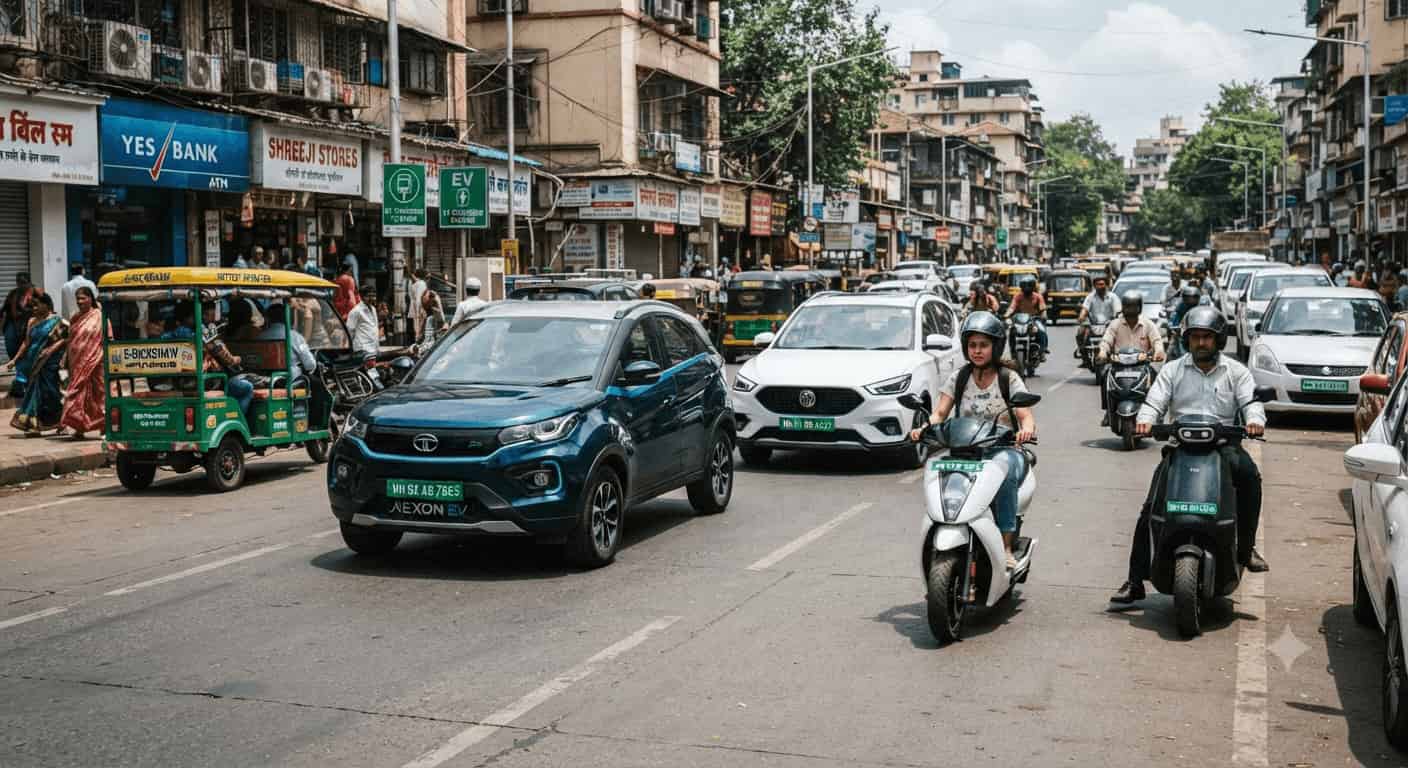
Electric vehicles are often presented as an important solution to urban air pollution. Unlike petrol or diesel vehicles, fully electric cars do not release exhaust emissions while driving. This can reduce pollution from busy roads and improve local air quality, especially in cities where traffic is a major source of nitrogen dioxide, carbon monoxide, and fine particulate matter.
However, the connection between electric vehicles and the Air Quality Index is not completely straightforward. EVs can reduce several important pollutants, but they do not eliminate every source of road-related pollution. Their overall impact also depends on how the electricity used to charge them is generated.
How Electric Vehicles Reduce Tailpipe Pollution
Petrol and diesel vehicles release pollutants directly from their exhaust systems. These emissions are especially concentrated near highways, intersections, schools, markets, and other high-traffic locations. When thousands of combustion-engine vehicles operate in the same area, they can create local pollution hotspots.
Fully electric vehicles have no tailpipe, so they do not directly emit nitrogen oxides, carbon monoxide, or exhaust-related particulate matter while being driven. Replacing conventional vehicles with EVs can therefore reduce roadside pollution and make the air cleaner for pedestrians, cyclists, traffic officers, street vendors, and people living near busy roads.
Pollutants EVs Can Help Reduce
A wider transition to electric transport can lower several traffic-related pollutants, including:
- Nitrogen oxides produced during fuel combustion
- Carbon monoxide from petrol and diesel engines
- Exhaust-related PM2.5 and soot
- Volatile organic compounds from fuel burning
- Local greenhouse-gas emissions from vehicle exhaust
These reductions can help improve city AQI, particularly in areas where vehicle emissions are one of the main causes of unhealthy air.
Why EVs Do Not Eliminate All Traffic Pollution
Although electric vehicles remove tailpipe emissions, they still produce some particulate pollution. Tyres wear down as vehicles move, while brakes and road surfaces release small particles into the surrounding air. Dust already present on roads can also be lifted back into the atmosphere by passing traffic.
Electric vehicles are often heavier than similar petrol cars because of their battery packs. This additional weight may increase tyre wear in some situations, although regenerative braking can reduce the use of conventional brake pads and lower brake-dust emissions.
Sources of Pollution That Remain
Even in a city with many electric vehicles, road transport can continue producing pollution through:
- Tyre wear
- Brake wear
- Road-surface damage
- Resuspended road dust
- Traffic congestion
- Construction dust near transport routes
This means EV adoption should be combined with cleaner roads, better public transport, dust control, and reduced traffic congestion.
Does the Electricity Source Matter?
The environmental benefit of an electric vehicle also depends on the electricity used to charge it. If a city relies heavily on coal-fired power plants, some emissions are shifted from vehicle exhaust pipes to power-generation facilities.
This does not mean EVs provide no air-quality benefit. Power plants are usually located away from crowded streets, and their emissions can be regulated more centrally than millions of individual vehicle engines. Electric motors are also generally more energy-efficient than internal-combustion engines.
However, the greatest air-quality benefits occur when EVs are charged using electricity from cleaner sources such as solar, wind, hydroelectric, or low-emission power systems.
When EVs Deliver the Biggest AQI Improvement
Electric vehicles are most effective at improving urban air quality when:
- Traffic emissions make up a large share of local pollution.
- Older diesel vehicles are replaced first.
- Electricity generation becomes cleaner.
- Public buses, taxis, and delivery fleets are electrified.
- Cities also control road dust and industrial emissions.
Electrifying vehicles that travel long distances every day can produce greater benefits than replacing cars that are rarely used.
Can EVs Solve City Air Pollution Alone?
Electric vehicles are an important part of cleaner urban transport, but they cannot solve the entire AQI problem. In many cities, pollution also comes from factories, power plants, construction work, waste burning, diesel generators, household fuels, and seasonal crop-residue burning.
If these sources remain uncontrolled, AQI may continue to reach unhealthy levels even after EV adoption increases. Cities therefore need a broader strategy that combines cleaner vehicles with renewable energy, stronger emission standards, reliable public transport, walking and cycling infrastructure, and better pollution monitoring.
Conclusion
Electric vehicles can help reduce city AQI by eliminating tailpipe emissions and lowering roadside concentrations of nitrogen oxides, carbon monoxide, soot, and exhaust-related PM2.5. Their benefits are especially noticeable in congested areas where vehicle emissions are a major pollution source.
However, EVs still contribute to tyre wear, road dust, and other non-exhaust pollution. Their full environmental value also depends on how charging electricity is produced. Electric vehicles are therefore not a complete solution, but they are an important part of a wider plan for cleaner transport and healthier urban air.