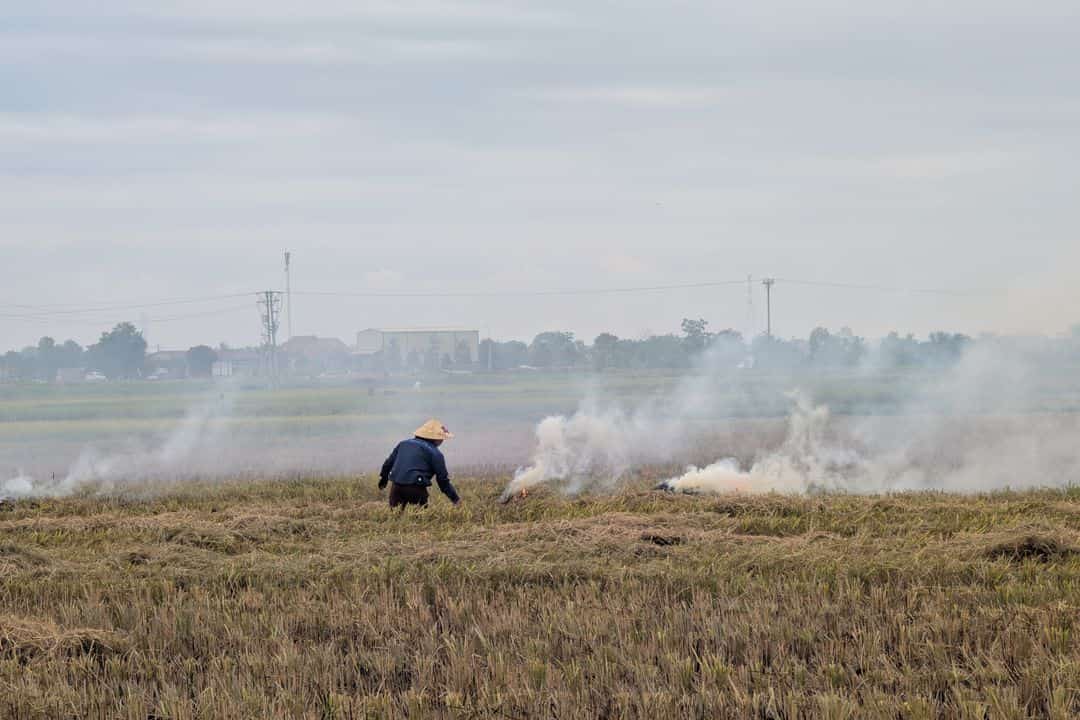
Every year after the monsoon, concerns about crop burning return as air quality begins to decline across northern India. Farmers in some regions burn leftover crop residue to prepare fields for the next planting season, releasing large amounts of smoke and fine particulate matter into the atmosphere. As a result, many people wonder whether crop burning will once again cause AQI levels to spike.
While it is impossible to predict exactly how severe this year’s pollution season will be, experts agree that crop burning remains an important factor to watch. However, they also emphasize that it is only one piece of a much larger air pollution problem. Weather conditions, vehicle emissions, industrial pollution, and local sources all influence how much crop-burning smoke ultimately affects air quality.
Why Crop Burning Affects AQI
After harvesting paddy crops, many farmers face a short window before the next planting season begins. Burning crop residue is often the quickest and least expensive way to clear fields, although it releases large amounts of PM2.5, PM10, carbon monoxide, and other pollutants.
Once released, smoke can travel hundreds of kilometers depending on wind direction and weather conditions. Cities located downwind may experience a noticeable rise in AQI, even though the fires are occurring far away. Fine particles from crop burning are particularly concerning because they can remain suspended in the air for extended periods and contribute to unhealthy pollution levels.
Pollutants Released During Crop Burning
Crop residue burning produces a mixture of harmful pollutants, including:
- PM2.5 and PM10 particles
- Carbon monoxide (CO)
- Nitrogen oxides (NOx)
- Smoke and black carbon
- Volatile organic compounds (VOCs)
These pollutants can reduce visibility, increase AQI, and pose health risks, especially for children, older adults, and people with respiratory conditions.
What Experts Are Watching This Year
Experts are monitoring several factors instead of focusing only on the number of farm fires. Satellite observations help track active burning, while weather forecasts provide clues about how smoke may spread.
Meteorological conditions are especially important. If winds are strong and rainfall occurs, smoke can disperse more quickly. However, calm winds, cooler temperatures, and shallow atmospheric mixing can trap pollutants near the ground, causing AQI levels to rise rapidly. Researchers also note that the timing of fires, particularly evening burning, can increase overnight pollution because pollutants remain trapped close to the surface.
Crop Burning Is Only One Part of the Problem
Although crop burning receives significant attention every autumn, scientists caution against blaming it alone for poor air quality. Vehicle emissions, industrial pollution, construction dust, waste burning, and seasonal weather conditions all contribute to declining AQI.
Studies have shown that the contribution of crop burning can vary considerably from day to day depending on weather patterns. During peak smoke events, it may account for a substantial share of PM2.5, while at other times local pollution sources dominate.
Can Better Management Reduce Pollution?
Government agencies and agricultural experts have introduced several measures to reduce crop burning, including subsidizing residue-management machinery, promoting alternative uses for crop residue, and increasing satellite monitoring of farm fires.
Recent government data indicates that reported stubble-burning incidents have declined significantly compared with previous years. However, experts note that even with fewer fires, unfavorable weather can still allow smoke and existing urban pollution to combine, leading to unhealthy AQI levels.
How You Can Prepare
If you live in a region affected by seasonal smoke, staying informed is the best way to reduce exposure. Monitor daily AQI forecasts during the post-monsoon months and limit prolonged outdoor activities when pollution levels become unhealthy.
You can also take simple precautions:
- Check AQI updates before spending time outdoors.
- Keep windows closed during severe pollution episodes.
- Use a HEPA-filter air purifier indoors if available.
- Wear a properly fitted N95 or KN95 mask when AQI is high.
- Avoid strenuous outdoor exercise during smoke events.
These measures can help reduce exposure while seasonal pollution persists.
Conclusion
Crop burning is likely to remain an important factor influencing AQI during the post-monsoon season, but it is rarely the only cause of poor air quality. Weather conditions, local emissions, and atmospheric patterns determine how much smoke ultimately affects nearby cities. By monitoring AQI forecasts and understanding the different factors that contribute to seasonal pollution, individuals can make informed decisions and better protect their health during the months when air quality is most likely to deteriorate.