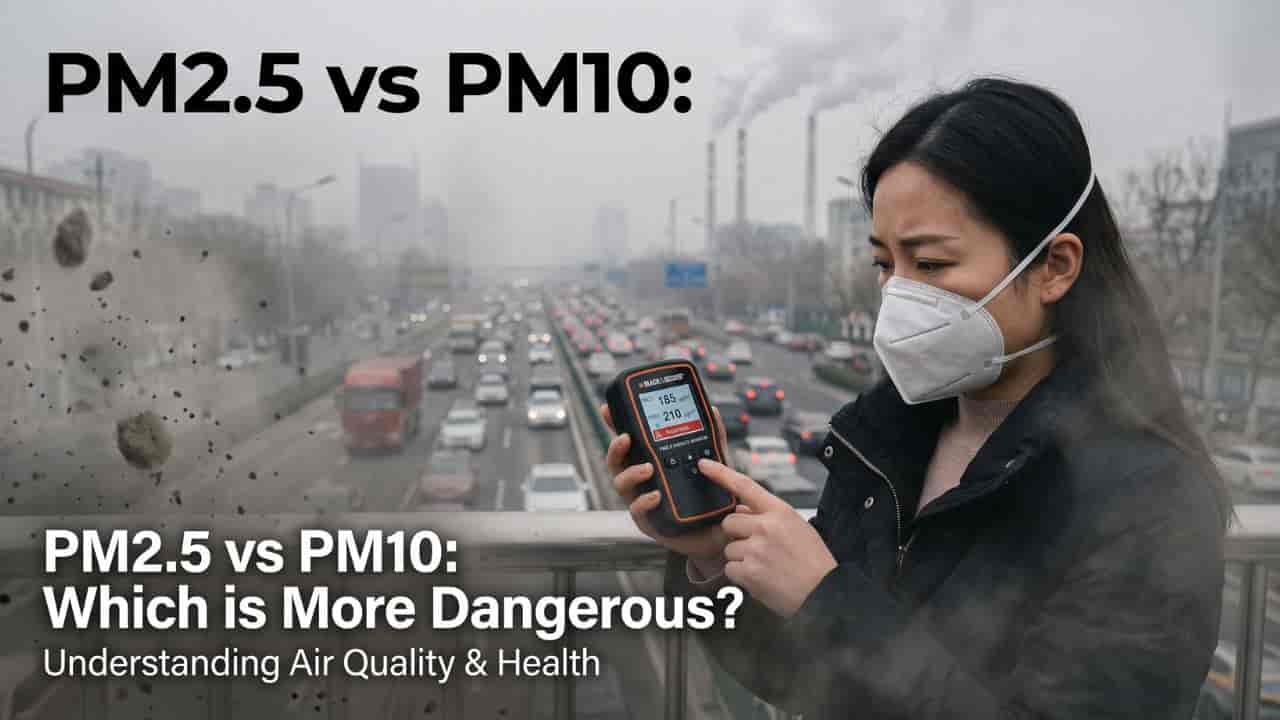
Air pollution is one of the biggest environmental health concerns worldwide, and particulate matter is a major contributor to poor air quality. If you’ve ever checked an AQI report, you’ve likely come across terms like PM2.5 and PM10. While both are harmful pollutants, they differ in size, sources, and health impacts.
Understanding the difference between PM2.5 and PM10 is important because these particles affect the human body in different ways. Although both can contribute to respiratory problems and lower air quality, one is generally considered more dangerous than the other.
What Are PM2.5 and PM10?
Particulate matter (PM) refers to tiny solid particles and liquid droplets suspended in the air. The number attached to PM indicates the particle’s diameter in micrometers (µm).
PM10 includes particles that are 10 micrometers or smaller. These particles are often produced by road dust, construction activities, pollen, and other larger airborne materials. Because of their size, PM10 particles are usually trapped in the nose and upper respiratory system.
PM2.5 particles are much smaller, measuring 2.5 micrometers or less in diameter. They are commonly produced by vehicle exhaust, industrial emissions, power plants, biomass burning, and wildfire smoke. Their extremely small size allows them to travel much deeper into the body.
Why Size Matters
The main difference between PM2.5 and PM10 is how deeply they can penetrate the respiratory system. Larger particles are more likely to be filtered out naturally by the nose and throat. Smaller particles, however, can bypass these defenses and reach sensitive areas of the lungs.
Some key differences include:
- PM10 particles are larger and heavier.
- PM2.5 particles are about four times smaller than PM10.
- PM2.5 remains airborne longer and travels farther.
- Smaller particles are more likely to enter the bloodstream.
These characteristics make PM2.5 a greater concern for long-term health.
Sources of PM2.5 and PM10
Although both pollutants are forms of particulate matter, they often originate from different sources. PM10 is generally associated with dust and larger particles that become airborne through physical activities or natural events.
Common PM10 sources include construction work, unpaved roads, agricultural activities, and dust storms. These particles are usually visible in the form of haze or dust clouds.
PM2.5 is more closely linked to combustion processes. Vehicle engines, industrial facilities, coal-fired power plants, and burning wood or crop residue release large amounts of fine particulate matter into the atmosphere. Because these particles are so small, they can remain suspended in the air for extended periods.
Why PM2.5 Is Harder to Control
Unlike larger particles that settle relatively quickly, PM2.5 can stay in the atmosphere for days and travel long distances with wind currents. This means pollution generated in one area can affect air quality in neighboring cities or even regions.
As a result, reducing PM2.5 often requires broader pollution-control measures rather than local dust management alone.
Which Pollutant Is More Dangerous?
While both pollutants can harm health, PM2.5 is generally considered more dangerous. The reason lies in its ability to penetrate deep into the lungs and, in some cases, enter the bloodstream.
PM10 mainly affects the upper respiratory tract, causing irritation of the nose, throat, and airways. High concentrations can worsen allergies and respiratory conditions, especially in sensitive individuals.
PM2.5, however, can reach the smallest air sacs in the lungs. Once there, it may trigger inflammation and contribute to both respiratory and cardiovascular diseases.
Health effects associated with PM2.5 exposure include:
- Asthma and breathing difficulties
- Reduced lung function
- Chronic respiratory diseases
- Heart disease and stroke
- Increased risk of premature death
For this reason, health organizations often consider PM2.5 one of the most harmful air pollutants.
How to Protect Yourself
When AQI levels are high, reducing exposure to particulate matter becomes important regardless of whether PM2.5 or PM10 is the dominant pollutant.
Practical steps include monitoring AQI reports, limiting outdoor activities during pollution events, keeping windows closed, and using HEPA-filter air purifiers indoors. If outdoor exposure is unavoidable, a properly fitted N95 or KN95 mask can help filter harmful particles.
People with asthma, heart disease, or other respiratory conditions should take additional precautions during periods of poor air quality.
Conclusion
Both PM2.5 and PM10 contribute to air pollution and can negatively affect health, but PM2.5 poses the greater risk. Its smaller size allows it to penetrate deep into the lungs and even enter the bloodstream, increasing the likelihood of serious respiratory and cardiovascular problems. While controlling both pollutants is important, reducing exposure to PM2.5 remains one of the most effective ways to protect long-term health and improve overall air quality.